What I Spend in a Week as a Graduate
Everyone’s finances look different, but I thought I’d share a realistic look at the kinds of things I spend money on in a typical week as a graduate.
Last updated: January 2026
Whether you’re a savvy saver or just trying to make your budget stretch to the end of the month, opening a savings account is a smart way to hit your goals. But let’s be real, the choice can be overwhelming — especially for students!
Most banks offer perks for student savings accounts that try to draw you in, so it’s hard to know which one actually helps you out the most. There’s more to think about than just the freebies, but don’t worry – we’ve got some top tips to help you choose.
It’s pretty simple: student savings account is a type of bank account for those in higher education. They usually come with handy perks like interest-free overdrafts and free railcards to help you stay on top of your finances while you’re at uni.
To open one, you’ll usually just need your UK driving licence or passport and your UCAS code (or your uni confirmation letter).
You don’t exactly need a savings account, but it could be super beneficial. You might have a part-time job and want to put your wages aside, or you might like to put a bit of money away each month from your student loan. Either way, having a savings account is a great way set money aside for financial emergencies, or even just for a rainy day.
The best part? By having a savings account, not only can you separate your savings from your daily spending money, but you can actually earn free money too (provided that you have a reasonable interest rate on the savings account). With a good interest rate, the more money you put into your account (and the longer you leave it there!), the more interest you’ll earn on your savings.
As a Santander member, you can access a Regular Saver account, giving you a 12-month fixed rate of 5%.
With a NatWest account, you can open a NatWest Digital Regular Saver to start saving valuable cash with a 5.5% interest rate.
This pretty much does what it says on the tin. An easy-access student savings account means you can access and withdraw your money anytime without any limits. It also means you can put as much or as little money as you like into the account, as there is no minimum amount.
The downside to these accounts is that they tend to have lower interest rates, meaning you won’t earn as much as you could using other accounts. However, it does mean that should you wish only to put a few pounds away each month or dip into your savings whenever you feel like it, you can do so without any limitations.
This is the opposite. Unlike an early-access savings account, a fixed-rate savings account limits when you can withdraw your money.
Usually, they come with a minimum deposit amount, too, and expect your money to stay in the account untouched for anything from three months to five years. However, these do tend to come with much higher interest rates. If you know you want to save for the long run and you won’t need to dip in and out of your savings, this is a great choice.
Remember that if you withdraw your money before the fixed-term date, you may forfeit the interest you have already gained on that money.
This doesn’t apply to all current accounts, but some come with savings accounts as part of their package. The most common and best for students are cash ISAs and lifetime ISAs.
ISAs are suitable for long-term savings. So you could begin saving while still at uni and keep the account after graduation to continue saving. The best bit about ISAs is that all interest on the money in your savings is tax-free. You can deposit a maximum of £20,000 annually, and all interest will be tax-free!
Lifetime ISAs, also known as LISAs, are helpful if you plan to save early for your first house. This type of ISA account is designed to be used for purchasing a home or for retirement.
Only a few provide LISAs, and the interest rate is lower than that of many standard savings accounts. However, it’s good to know that for any money you put into an account below £4000 a year, the Government will give you a 25% bonus on top. This means you could earn up to £1000 a year in free money.
However, there are some drawbacks to a LISA, such as restrictions on when you can withdraw the money and the maximum value of the house you want to use it on.

You can earn up to £18,570 in total income (wages plus interest) without paying tax on your savings. This is possible by combining your Personal Allowance, the Starting Rate for Savings, and the Personal Savings Allowance.
If you earn more than this, you still get a tax-free Personal Savings Allowance of £1,000 (or £500 for higher-rate taxpayers). Banks pay interest in full without taking tax, so if you go over your limit, HMRC will typically collect the tax automatically by adjusting your tax code. To keep your interest 100% tax-free regardless of your income, consider using an ISA.
Don’t let the options leave your head in a spin. All you need to do is the following to make sure you choose the right account for you:
Interest rates and perks change every year, so it pays to shop around. Don’t just go with the first bank you see – do a bit of homework first. Another great way to save money at uni is by making sure you aren’t overpaying on your household bills.
Here at Split The Bills, we use the best utility providers and create a package that suits you, including energy, water, Wi-Fi, and an optional TV Licence. If you’re worried about housemates not paying their share – don’t be. We’ll handle the chasing for you so everyone pays an equal share. Simple.
Check out how we work or grab a quote today.
Split The Bills is not a financial advisor. This should not be considered as professional financial advice. Do your own research and consult a professional financial advisor before making any financial decisions!

Everyone’s finances look different, but I thought I’d share a realistic look at the kinds of things I spend money on in a typical week as a graduate.

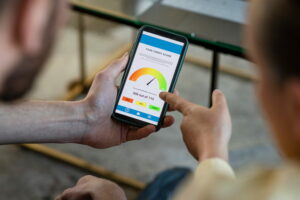
Credit scores are every adult’s worst nightmare and best friend; that single number can make or break your future, and for many, your time at university can make a bigger impact on that score than you might think.

Moving into a student house is one of the best parts of uni life; more freedom, living with your friends, and finally feeling like a proper adult. But one thing that catches almost everyone off guard? Bills.