How to Make a Rented House Your Home
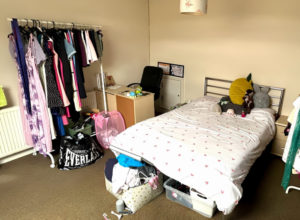
Moved into a shared house? Browse these top tips on how to make a student house look homely on a budget.

Young Professional vs Student Living: Key Differences

Last updated: January 2026
Many graduates and young professionals choose to live in shared housing. It provides the freedom of not living with parents, but without the high expense of living alone, especially in big cities.
Students often live in shared accommodations during university, so many young people already understand what shared housing involves. However, students living in shared housing often have different experiences from young professionals. If you’re a young professional considering living in shared accommodation, there are some extra factors you should consider before signing your tenancy agreement.
In this blog, we’ll cover the difference between professional and student housing, the pros and cons of young professional shared housing, and how shared utility bills work.
Professional houses are usually near good transport links, whereas student accommodation is typically centred around university campuses. When looking for a shared house to rent as a young professional, you’ll likely want to be closer to your desk or the heart of the city.
Professional houses are generally higher quality than student houses, which can result in a higher charge. The rent charge will also differ depending on the city’s rental market. For example, young professional accommodation in London will be way more expensive than in a city in the North.
Both joint and sole tenancies are commonly used in shared accommodation for students and professional housing. Student houses are usually rented with joint tenancy agreements (typically tied to the academic year). Sole tenancies are generally the go-to in professional houses, especially since you might be moving in with people you’ve never met before.
A sole tenancy also means you can move out without dragging everyone else into it. With a joint tenancy, if someone flaked on the rent or left early, everyone else would be on the hook for the cost.
While students are usually exempt from paying council tax, this is something that young professionals cannot avoid. Sometimes, if you opt for a house share with all bills included, your council tax will be all taken care of within that price.
Shared housing is typically fully furnished, which is perfect if you don’t have a spare few grand to spend on sofas and fridges. This is great for your short-term budget and gives you a chance to save up money over a longer period.
Shared young professional accommodation is perfect if you’re a recent graduate who has just moved to a new city for work. Living with people of a similar age and in a similar position means you have a ready-made group of mates (of course, there’s no guarantee you’ll get on).
Discover tips on how to get along with your housemates to make your experience as pleasant as possible.
Sharing generally gets you more bang for your buck. You’ll likely get a spacious communal living room and a proper kitchen to cook in. Shared housing for young professionals sometimes offers en suite rooms if you don’t fancy sharing a bathroom.
Shared housing is generally much cheaper than living on your own. This means you’ll be able to live in a more central or nicer location than if you lived alone.
A lot of shared housing offers short-term tenancy agreements, which are ideal if you’re just testing the waters in a new city.
Living with a group of people you don’t know can be tricky. This can also be true for people whom you do know if you’ve moved into a house share with your mates. People have different cleaning standards, which can lead to some awkward kitchen stand-offs.
If you’re on a sole tenancy, check if there are any rules or cleaning rotas in place when you move in to resolve common house share arguments before they even start!
Unlike in a student house, where everyone is a student and is likely on a similar schedule, professionals work all sorts of hours.
If you’ve got to be up early, you might not appreciate your housemate coming home in the early morning hours and making a racket. But this is easily solved with a quick chat – and maybe a decent set of earplugs!
Living with people you don’t know can make paying for water, gas and electric bills a total headache. You might be stressed about what happens if someone forgets to pay or whose responsibility it is to set up direct debits. Luckily, that’s exactly what we’re here for at Split The Bills.
The tenancy agreement should stipulate who is responsible for utilities. Landlords sometimes include this cost in the rent, but if they don’t, you’ll need an organised system. Otherwise, payments can easily go missing, or some housemates might end up paying more than their fair share.
We really don’t suggest opening a joint bank account with housemates. If the account goes overdrawn or someone has poor credit, it could mess up your own credit rating.
Transferring monthly payments into one tenant’s account might be an option. But if the bills are put under one person’s name, they will be liable for any late payments, which is hardly ideal.
If you’re still stressed about how bills will work in a shared house, Split the Bills has a solution. We’re a bill-splitting service trusted by thousands of young professionals and students.
Our team sets up utility accounts, manages direct debits, and ensures everyone pays their part of the bills! All you have to do is pay your own monthly bills (which we’ll calculate for you). You can include all the bills you need in your personalised package – energy, broadband, water, and even a TV Licence if you want to watch live TV.
Discover how we work and help young professionals living in shared accommodation, or get a price today!
Moved into a shared house? Browse these top tips on how to make a student house look homely on a budget.

Everyone’s finances look different, but I thought I’d share a realistic look at the kinds of things I spend money on in a typical week as a graduate.

Credit scores are every adult’s worst nightmare and best friend; that single number can make or break your future, and for many, your time at university can make a bigger impact on that score than you might think.