
What I Spend in a Week as a Graduate
Everyone’s finances look different, but I thought I’d share a realistic look at the kinds of things I spend money on in a typical week as a graduate.

Last updated: January 2026
Whether you’re a student who has just moved into your first shared house or a young professional renting your first flat, you’ll have to get to grips with paying utility bills, including your water bill.
If you’ve never paid a water bill before, you might wonder how often you’ll get billed and how often you need to pay. We’ve broken down everything you need to know about how often you pay the water bill.
If a water meter is installed in the house, you’ll typically receive a metered bill every six months for all the water you’ve used and wastewater treatment.
Not sure if you have one? The easiest shortcut is to just ask your landlord or letting agent. They’ll be able to tell you if there’s a water meter or if the house is on a standard tariff (more on what this means below). If you do have a meter, you’ll need to take a reading when you first move in.
Check out our complete guide on how to set up your water bill for more information on meter readings and water suppliers.
Fixed charges
As well as your clean water supply and wastewater charges, your water bill will also contain fixed charges. These cover essential running costs, like pipe maintenance and customer service.
Receiving an estimated bill
If you have a meter, you might still receive an estimated bill if you don’t provide the water company with your meter readings. This bill will either be based on previous meter readings or on water usage in similar homes.
If you don’t have a meter, then you’ll be on a standard tariff, and you’ll typically be billed once a year for freshwater and wastewater. You’ll likely receive your bill from 1 April to 31 March, and it will be based on the rateable value of your property (rather than the amount of water you use).
Rateable value
The government determines the rateable value of a property based on its location and size. Your water company will use this value to determine how much your water bill will be (the property’s rateable value should be on your water bill).
If your property doesn’t have a rateable value, the water company will use an assessed volume charge (based on the size or type of the property or the number of occupants) or a flat rate charge (a flat rate that’s the same for everyone).
Fixed charges
Just like if you have a meter, you’ll also be charged for fixed charges to cover the water company’s essential running costs.
Although you’ll usually be billed every six months (if your house has a meter) or every year (if your house doesn’t have a meter), most water suppliers let you split the cost into regular monthly payments.
However, if you live in a shared house, one person must be responsible for setting up your account and paying the water bill through direct debit. Everyone else will need to remember to transfer their portion of the bill each month.
The catch? If a housemate is late with their cash, the person whose name is on the bill has to cover the difference.
Thankfully, there’s a simpler way to manage it.
Setting up and paying your water bill can be straightforward if you live alone, but it gets a bit more complicated if you live in a shared house. Split The Bills offers a simple way to split household bills, no matter how many people you live with!
Our team will do all the hard work of setting up your utility accounts and direct debits, so you won’t have to worry about understanding your water bill or trying to get everyone in the house to pay on time.
You can choose the services you want to be included in your package, including gas, electricity, water, and even a TV licence (if you need one). All of the bills will be split equally across the house, so everyone just pays one neat monthly bill. We even offer an uncapped gas and electricity plan, which means you won’t be charged if you use more than your predicted energy usage. This gives you peace of mind about how much you’ll pay each month.
If you want a hassle-free way to pay shared household bills, you can find out more about what we do or grab a quick quote today.

Everyone’s finances look different, but I thought I’d share a realistic look at the kinds of things I spend money on in a typical week as a graduate.
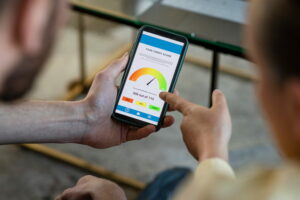
Credit scores are every adult’s worst nightmare and best friend; that single number can make or break your future, and for many, your time at university can make a bigger impact on that score than you might think.

Moving into a student house is one of the best parts of uni life; more freedom, living with your friends, and finally feeling like a proper adult. But one thing that catches almost everyone off guard? Bills.